
Tuesday, 6 October
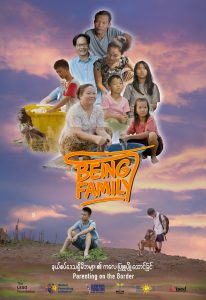
Following the screening, hear directly from the film’s screenwriter and director, alongside the researchers who co-created and evaluated the film with communities. Together, we’ll explore:
- How storytelling can be used to prevent violence against children in the home.
- What it takes to co-create violence prevention interventions with displaced communities.
- How entertainment-education can promote positive parenting and family relationships at scale.
Facilitators:
- Saw Ler Wah, Filmmaker, Sermpanya Foundation, Thailand
- Khaing Zar Lwin, Researcher and Co-Investigator, Myanmar
- Amanda Sim, Co-Principal Investigator, McMaster University, Canada
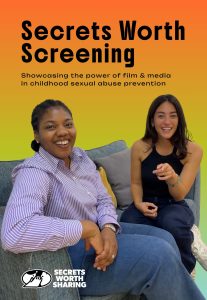
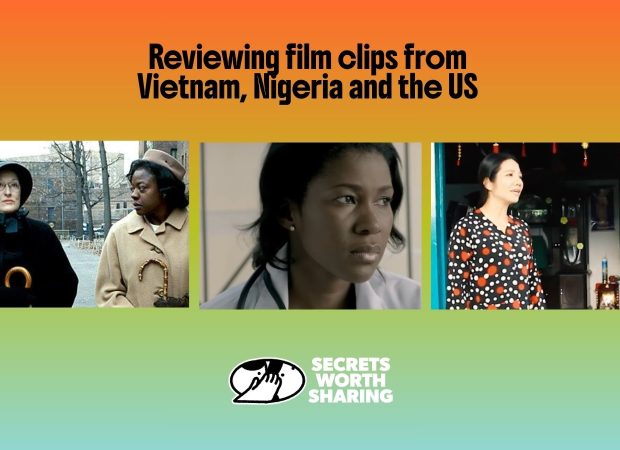
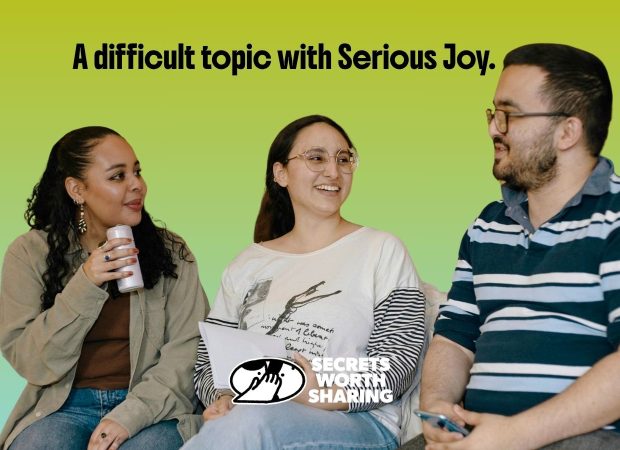
In this 90-minute taster, childhood sexual abuse prevention organisation Secrets Worth Sharing invites you to trial one of their most popular awareness & prevention formats. In their community film clubs, aptly named ‘Secrets Worth Screening’, a public survivor joins a co-host to critique scenes of childhood sexual violence in film and TV. Our cohosts for this session will be organisation founder Sophia, and Board member, Chioma. Clips include one example each from the USA, Nigeria and Vietnam. Join us for an approachable, informative session filled with their trademark ‘serious joy’.
Facilitators:
- Sophia Xuan Luu
- Chioma Alade
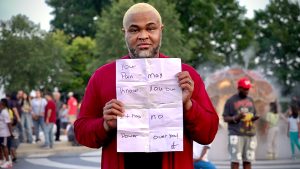
A series of survivor stories and panel reflections on the importance of placing survivor voices at the heart of child sexual abuse prevention.
Join our exclusive screening of ‘We’ve Waited Too Long’ to hear the stories of three amazing individuals who have suffered abuse, survived, and become powerful advocates for prevention. Their experiences are diverse and point to the breadth of common circumstances associated with child sexual abuse. The strongest argument for prevention comes from the testimony of public survivors. Their stories and bravery are the most compelling calls to action to ensure future generations of children don’t have to walk the same path.
We will also welcome a fantastic panel to discuss the critical importance of survivor advocacy and leadership, the potential for survivor movements to shift public opinion and decision-making, and the potential for proactive prevention at scale – across countries and global networks.
Facilitator:
- Aengus Ó Dochartaigh, Outreach Director, MOORE | Johns Hopkins Bloomberg School of Public Health
Panel:
- C. Alexandria Bernard (They/Them), Founder and Executive Director of Alexandria Saves Kids
- Tarana Burke, Activist and Founder of MeToo movement
- Joan Njagi, Child Sexual Violence Researcher, SVRI
- Elizabeth Letourneau, Director, MOORE | Johns Hopkins Bloomberg School of Public Health
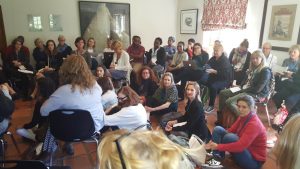
Has the Elephant left the room – or has it transformed? 10+ years since “Engaging the Elephant in the Room: Facilitating a feminist way forward for women and men to work together on violence against women” (SVRI Forum 2015, Stellenbosch, South Africa)
At the SVRI Forum 2015 in Stellenbosch, South Africa, the impromptu Elephant in the Room discussion created a rare space for open and respectful dialogue about the opportunities, tensions, and unanswered questions surrounding work with men and masculinities in the prevention of violence against women. This was followed by a series of conversions in various spaces, particularly SVRI Forums and CSW, with the objective to continue dialogues, consultations and updates on steps taken – including by MenEngage Alliance. More than a decade later, this SVRI Forum Salon 2026 will revisit that conversation in light of new trends, including increased interest in men and masculinities among new actors, decreasing support for gender equality, changing funding landscapes, evolving accountability debates, and growing concerns about fragmentation within the field.
Participants are invited into an open, honest and bold space, to reflect on key developments, persistent challenges, and emerging opportunities, including concerns about the risks of increasing fragmentation and siloing, shifting donor priorities, and the diversity of voices shaping the agenda. We envision that this will be a space for collective analysis and consolidated articulation of the field’s key tensions “elephants” across various contexts, with the intention to generate shared understandings of the problem and collectively chart possible solutions.
Organising Partners:
MenEngage Alliance, SVRI, COFEM, Breakthrough, Equimundo, and Raising Voices.
Wednesday, 7 October
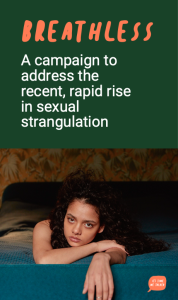
Despite the prevalence and risks, there are very few prevention initiatives addressing sexual strangulation among young people. The Breathless campaign by It’s time we talked aims to prevent the harms of sexual strangulation by:
- raising awareness among young people, professionals and the broader community about its prevalence and risks
- supporting critical thinking about the influences – such as pornography, social media, partners and peers – that shape sexual norms
- providing information from trustworthy sources
- encouraging informed conversations about strangulation – and about safety, respect, equality, mutual respect and consent.
This multimedia presentation will explore key themes addressed by the Breathless campaign, showcase campaign resources, and feature excerpts from our interviews with young people, victim-survivors of sexual strangulation, and experts.
Facilitator:
Maree Crabbe, It’s time we talked, Australia.

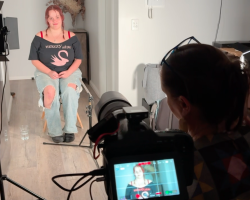
Edutainment has strong potential to change attitudes, norms and behaviors related to violence against women and children at scale. However, evidence indicates not all efforts are successful. How can new edutainment products combine the creativity and captivating storylines of the entertainment industry with scientific evidence to support positive behavior change? Co-creation holds the answer. This salon showcases the collaborative co-creation process of a feature length film between researchers, social behavior change experts and producers using a case study in Senegal. The film “For Honor” promotes positive masculinities among young Senegalese men, challenges harmful gender norms and intimate partner violence (IPV), through dual themes of “honor” on the football field and in relationships.
Language: English (film is shot in Wolof, with English subtitles), discussion will be in English.
Facilitator:
- Amber Peterman, UNICEF Evaluation Office, Kenya:
Speaker:
- Malick Dione, Ph.D. fellow at Wageningen University, Netherlands and consultant at the International Food Policy Research Institute (IFPRI), Senegal:
- Kinty Ndiaye, Project Manager, RAES, Senegal
Thursday, 8 October
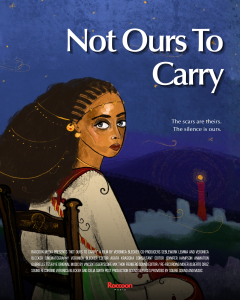
Not Ours to Carry is a 38-minute documentary following three Tigrayan women demanding accountability for conflict-related sexual violence in post-war northern Ethiopia. Made on location in Tigray, told entirely in their words, on their terms. Up to 350,000 women experienced conflict-related sexual violence during the Tigray War. 25 military convictions followed. The patterns this film documents: institutional silence, inadequate support, systemic failure, are not unique to Tigray. They repeat across every conflict zone, from Sudan to the DRC to Ukraine.
Facilitators:
- Veronica Blecker, director, Raccoon Media.
- Seblework Lemma, Tigrayan co-producer and co-host.
The WEAVE Project is a collective endeavour by feminist researchers, activists, and activist-researchers from four countries – Australia, India, Nicaragua and South Africa – to document women’s movements against violence and their impacts on policies.
The India research report traces the history of Indian women’s movements against violence through the voices, stories and standpoints of those who were in the thick of some key struggles, each marking an inflection point in the evolution of a feminist politics of resistance.
The film offers glimpses of women’s movements as chronicled by feminist film-makers. From the handwritten pamphlets, word-of-mouth mobilisation and blurred footage of the early years to the flowering of feminist art, music and street theatre ; the slow and often painful process of building solidarities across divides; the widening of feminist agendas to the confronting state repression and the violence of ‘development’, to the othering and targeting of minorities driven by the idea of India as a Hindu nation – the film opens windows into the journeys that have brought women’s movements to the frontlines of democratic struggles in India today.
The film is dedicated to Bilkis Dadi, the indomitable octogenarian grandmother who became the face of the country-wide protest against a new citizenship law that was opposed as antithetical to the spirit of India’s secular Constitution and its guarantee of equal treatment for all.
This training aims to raise awareness about the gendered and intersectional nature of technology-facilitated gender-based violence (TFGBV) and its impact on those in the public eye. It supports individuals to develop the skills and confidence to proactively safeguard their online presence, and advocates for systemic report.
By the end of this session, participants will have:
Facilitator: